
Duration:2 Days
Delivery:Face to Face

Who is the course designed for?
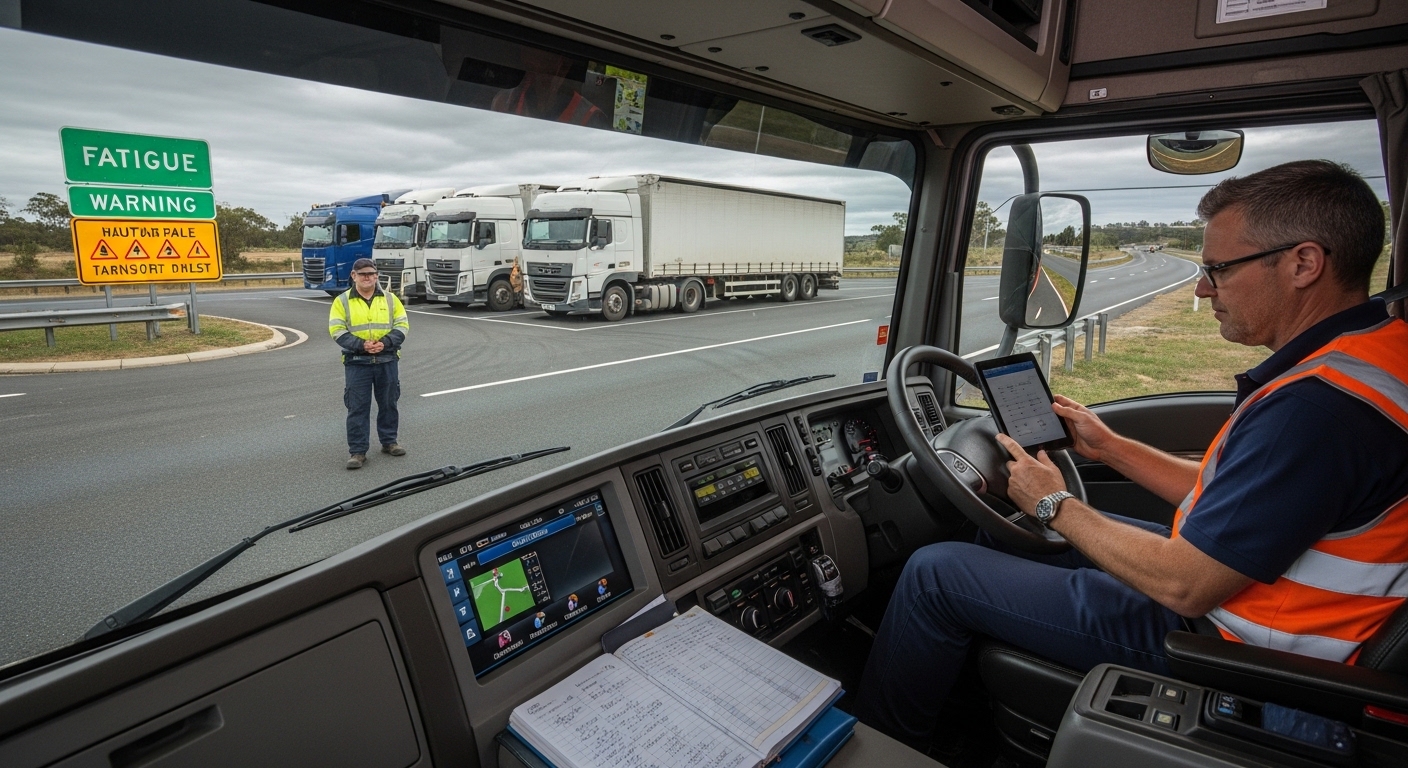
This unit involves the skills and knowledge to equip heavy vehicle drivers with the skills and knowledge required to manage fatigue and to work safely within the Transport and Logistics industry.
It includes applying fatigue risk management strategies, identifying and acting on signs of fatigue, operating within a fatigue risk management system, planning and navigating trips, updating and maintaining records, complying with work and rest limits, and implementing appropriate strategies to minimise fatigue during work activities.
Being awarded this unit of competency is a necessary requirement to operate under a National Heavy Vehicle Regulator (NHVR) Fatigue Management Accreditation. Learners who demonstrate competence to the required standard will receive a Statement of Attainment in the Unit of Competency TLIF0005 Apply a fatigue risk management system.
In addition, this unit of competency supports the Basic and Advanced Fatigue Risk Management schemes requirement for Heavy Vehicles under the National Heavy Vehicle Accreditation Scheme (NHVAS).
01. What does the course offer?
The program has been organised to provide students with skills and knowledge to equip heavy vehicle drivers with the skills and knowledge required to manage fatigue and to work safely within the Transport and Logistics industry. It includes applying fatigue risk management strategies, identifying and acting on signs of fatigue, operating within a fatigue risk management system, planning and navigating trips, updating and maintaining records, complying with work and rest limits, and implementing appropriate strategies to minimise fatigue during work activities.
The program is delivered ‘on-the-job’ at the client’s premises. Training delivery combines face-to-face trainer led theory classes and practical sessions. In most cases there will be no more than 8 students in any class.
Students are provided with all required course material including a training manual that covers all parts of the course. Additional material will be made available during training sessions if required.
Forkpro Australia, as far as is practical, will ensure that employers and students are kept informed of their progress throughout the training and assessment process.
02. Course requirements
- Statement of Attainment for TLILIC0004 Licence to operate an order picking forklift truck – issued by Forkpro Australia.
- High Risk Work Licence for LO class – issued by SafeWork NSW, WorkCover QLD or WorkSafe ACT.
03. Pre-requisite units
Nil.
“Students can contact the licencing authority for qualification criteria and advice. The contact phone number for SafeWork NSW is 131050, WorkSafe ACT is (02) 6207 3000 and WorkCover QLD is 1300 362 128.”
COURSE OUTLINE
- Identify and manage fatigue risk in the road transport sector
- Potential causes and symptoms of fatigue are identified and action is taken to minimise their effects in accordance with workplace procedures
- Fatigue symptoms are recognised and necessary steps are taken in accordance with workplace procedures, to ensure that effective work capability and alertness are maintained
- Own and others’ fitness to drive is monitored and assessed in accordance with workplace procedures, and appropriate action is taken as required
- Factors that increase the risk of fatigue related incidents are managed
- Counter measures and relevant workplace practices in combating fatigue are adopted and applied
- Health and wellbeing choices are identified that ensure driver fitness to safely perform workplace duties
- Operate within a road transport fatigue risk management system
- HVNL legal requirements, liabilities and responsibilities for effective fatigue management within the workplace are identified, interpreted and complied with
- Relevant regulations related to driving heavy vehicle offences, and fatigue duty of care are identified and applied in accordance with legislation
- Heavy vehicle driver regulations and workplace procedures for fatigue risk management, wellbeing, and fitness for work are identified and applied
- Relevant workplace induction into the road transport fatigue risk management system is completed
- Workplace fatigue management strategies are identified and implemented to minimise driver fatigue
- Workplace requirements and responsibilities for fatigue risk management are identified and applied
- Relevant documentation is carried while in a heavy vehicle
- Legal exemptions for fatigue compliance are identified and applied
- Concerns related to strategies to address fatigue and associated workplace risks are communicated to relevant personnel
- Plan and navigate a heavy vehicle trip
- Heavy vehicle driver trips are planned, communicated and implemented and potential fatigue hazards are planned for in accordance with workplace procedures
- Rest and work periods are identified to match heavy vehicle driver fitness and trip conditions
- Legal requirements as they relate to fatigue management are complied with when changes in schedules, trip conditions and operational requirements are required
- Deviations made to proposed trip plan prior to departure are communicated with relevant personnel in accordance with workplace procedures
- Deviations made to proposed trip plan while on route are communicated with relevant personnel in accordance with workplace procedures
- Comply with work and rest hours
- Work and rest options available to heavy vehicle drivers are identified and applied in accordance with workplace procedures and HVNL
- Relevant work hours including standard, solo and two-up arrangements and long/night hours are complied with in accordance with workplace procedures and HVNL
- Suitable and minimum rest breaks are complied with in accordance with workplace procedures and fatigue management regulations
- Information is identified and relevant actions are taken to prevent non-compliance with fatigue management procedures while working in standard hours and within an accredited fatigue risk management system
- Rest and work periods are counted in accordance with the HVNL
- Update and maintain records
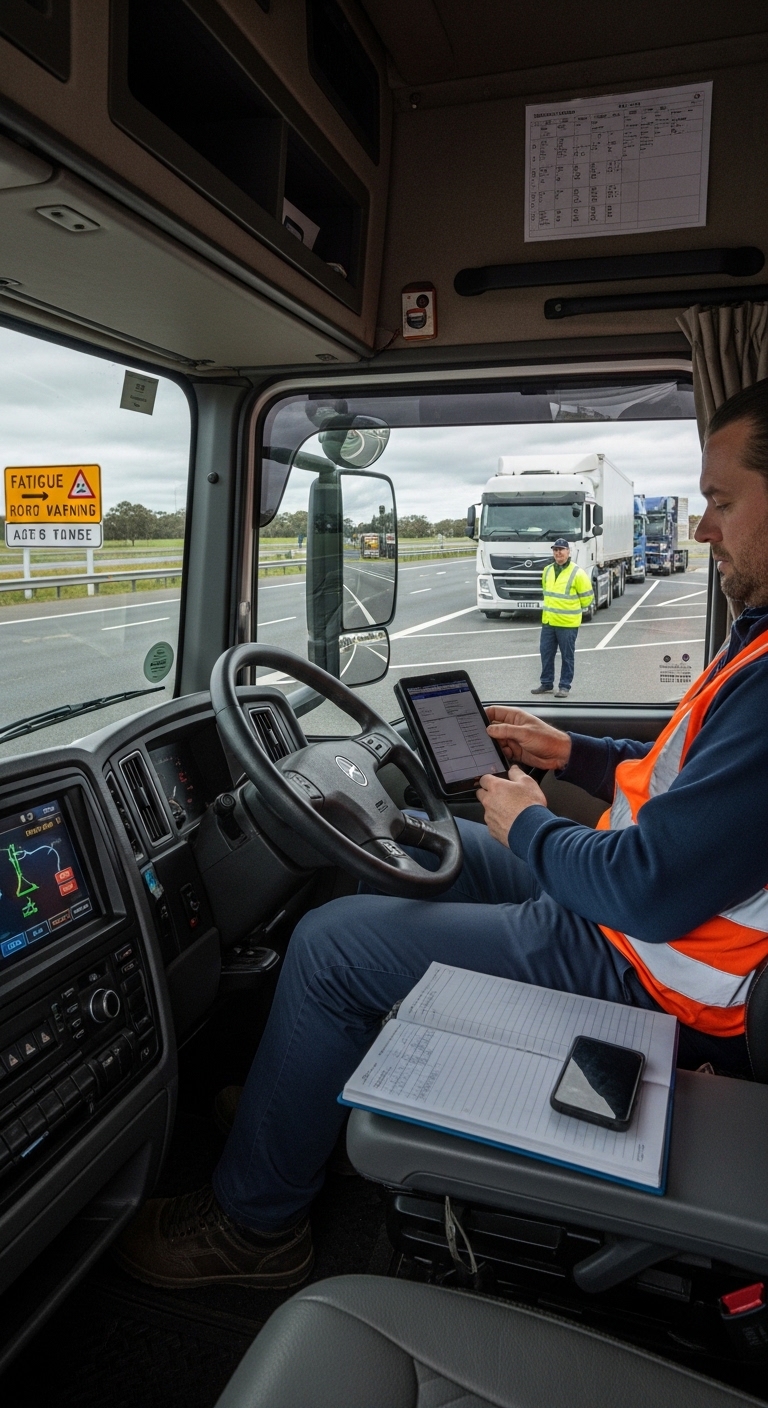
- Heavy vehicle regulatory requirements relating to work diary, records and work duties are applied
- Requirements of work diary/records are determined as they relate to heavy vehicle driver duties
- Trip information is gathered in a timely manner and accurately entered into work diary/record in accordance with regulatory requirements and workplace procedures
- Information entered into work diary/records is accurately and legibly maintained in accordance with regulatory requirements and workplace procedures
- Work diary/records are recorded after each work and rest change in accordance with HVNL
- Corrections are accurately and legibly entered into work diary/records in accordance with workplace procedures and regulations
- Work diary/records are stored in an accessible location in accordance with workplace procedures
- Penalties relating to heavy vehicle drivers for failing to record information or making false or misleading entries in work diary/records are identified
- Records are submitted within regulated timeframes to relevant personnel
- Requirements while operating under an exemption notice are recorded and maintained
- Work diary/record/equipment malfunctions are recorded in accordance with regulations and workplace procedures, and are reported to relevant personnel
